What goes in
Four phone photos of a face, in different light. Two pictures of a room as the moodboard. And a brief that fits on a sticky note: a black flap bag, a vertical UGC video, the hook "I stopped re-shooting product videos", three beats (hook, demo, detail), a friendly tone, TikTok and Instagram.
That's it. No shoot, no studio.

The steps
Step one is boring, and it's the one that matters: lock the look. The face becomes a character sheet, with front, side, back and a row of expressions. The room becomes an environment sheet, same light from a few angles. From here on every image is made from those two sheets, never from the original photos again.
Then the storyboard: one vertical keyframe per beat. Nothing gets animated until every keyframe is approved. The caption comes last, written for the clip that actually exists.
Where the QA sits
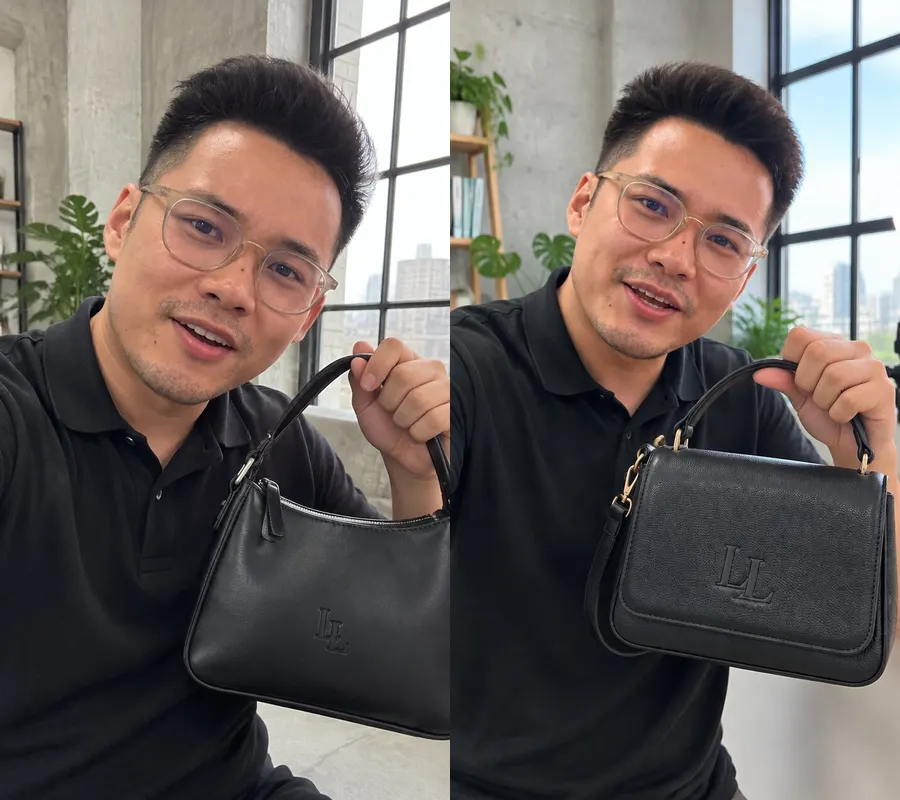
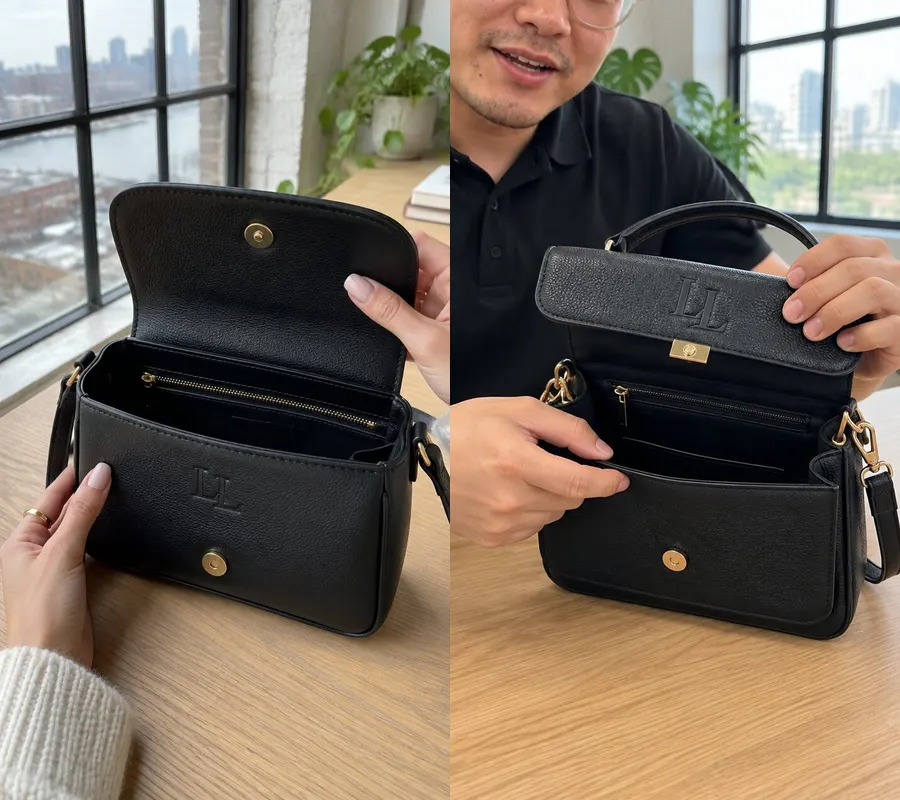
Right before the animation, because that's the slow, expensive step. Every keyframe gets checked against the sheets: same person, same room, same bag?
Two of five didn't make it. The first had the right person in the right room, holding the wrong bag: a shoulder bag instead of the flap bag. The logo was still on it, so at a glance it passes. The second had the right bag, held by someone else's hands. Rings, painted nails, a knit sleeve. Both got generated again before a single frame moved.
What comes out
A five-second vertical clip with the hook as a sticker, plus the caption.
And the part that's worth more than the clip: the two sheets. The next post starts from them, so it's the same person in the same room, and nobody has to pick up a camera.
Why it matters for your team
If your team posts a lot of short video, one clip isn't the problem. Keeping clip number one hundred on brand is.
Lock the look once, check every frame before it moves, and a reshoot turns into five minutes of review.
Want this for your brand? Content engine →